
No single misconfiguration causes a breach. A toxic combination of over-privilege, exposed endpoints, and unpatched workloads does. Seeing each risk in isolation is the problem.

Cloud-Native & Kubernetes Security
THE CHALLENGE
Modern cloud-native platforms run on Kubernetes and every sprint that ships features also ships permissions. RBAC roles written for a PoC become permanent. Staging namespaces inherit cluster-admin. Ingress rules get added for testing and never removed. Individually, each is a minor finding. Together, they form a traversable attack path from a compromised pod to your database, KMS keys, or customer data store.
THE RESULT
The compounding problem: cloud security tools generate thousands of findings, but none of them show you the path. A wildcard IAM role is a medium severity alert. An internet-facing node is another. A publicly exposed workload with a known CVE is a third. When those three exist in the same cluster and connect to the same data resource, that’s a critical breach scenario — and most teams never see it framed that way.

ISOLATED RISKS
(WHAT TOOLS SHOW)
- Wildcard IAM role on a service account
- Pod running as root with host path mount
- Publicly exposed dashboard or Ingress endpoint
- Unpatched container image (known CVE)
- Kubernetes secret stored in plaintext env var
TOXIC COMBINATION
(WHAT MATTERS)
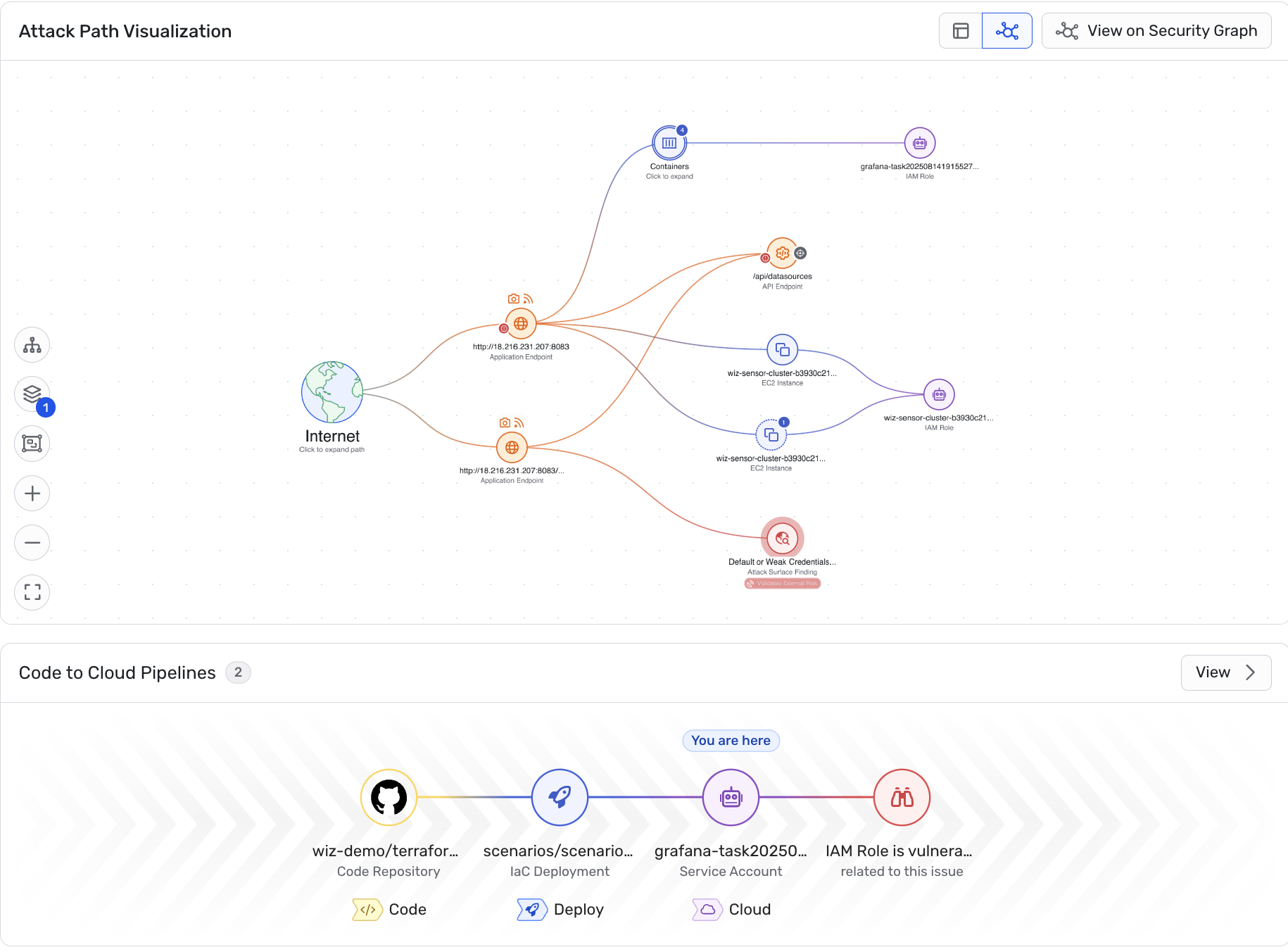
- Public endpoint → exploitable workload → over-privileged identity → sensitive data
- Compromised pod → cluster-admin token → cross-namespace secret read → exfiltration
- Shadow resource (unmanaged Helm chart) → outdated version → internet-facing exposure
- Staging misconfiguration persisted to production → lateral movement path opened
- AI workload with broad IAM → model registry access → training data exposure
WIZ SECURITY GRAPH SURFACES
- Full cluster inventory via KBOM — every workload, version, and shadow resource visible instantly
- Network Graph: visualise how deployments communicate across clusters, namespaces, and cloud services
- Attack path analysis: connected risk factors ranked by real exploitability, not alert volume
- Version drift detection: which clusters are behind, which are exposed, where to patch first
- Runtime context: correlate network flows, identity, and data sensitivity in one view
.

HOW AEROWAVE HELPS
When your cloud environment has grown faster than your ability to see it clearly, isolated alerts stop being useful. The right platform connects those findings into prioritised attack paths, giving security and platform teams a shared, real-time view of every risk across Kubernetes, from RBAC to runtime.
Aerowave helps you evaluate whether that platform is the right fit for your environment, defines the scope of an initial deployment, and makes sure your team is asking the right questions before committing to a purchase.
We enter the conversation when cloud-native complexity has outpaced your current tooling and we stay involved through the evaluation to make sure the deployment starts with your actual risk profile, not a generic demo environment.
.
